New Gemini Models

📣All the latest innovations in the digital world and the freshest news from the industry are now live in the new issue of ClockworkMag! Stay tuned to keep up with what's new.
In issue 43 of ClockworkMag, we've gathered eight topics, ranging from new models for AI agents and ad labels to steps that protect content creators and the new websites we've launched at Clockwork.
Leaving a month behind in the world of AI means leaving behind dozens of stories you can't afford to miss. In this issue, alongside new models, how AI is labeled, how it behaves, and how it affects user trust also take center stage. You'll find the topics we've selected for you, and what they mean for brands, below.
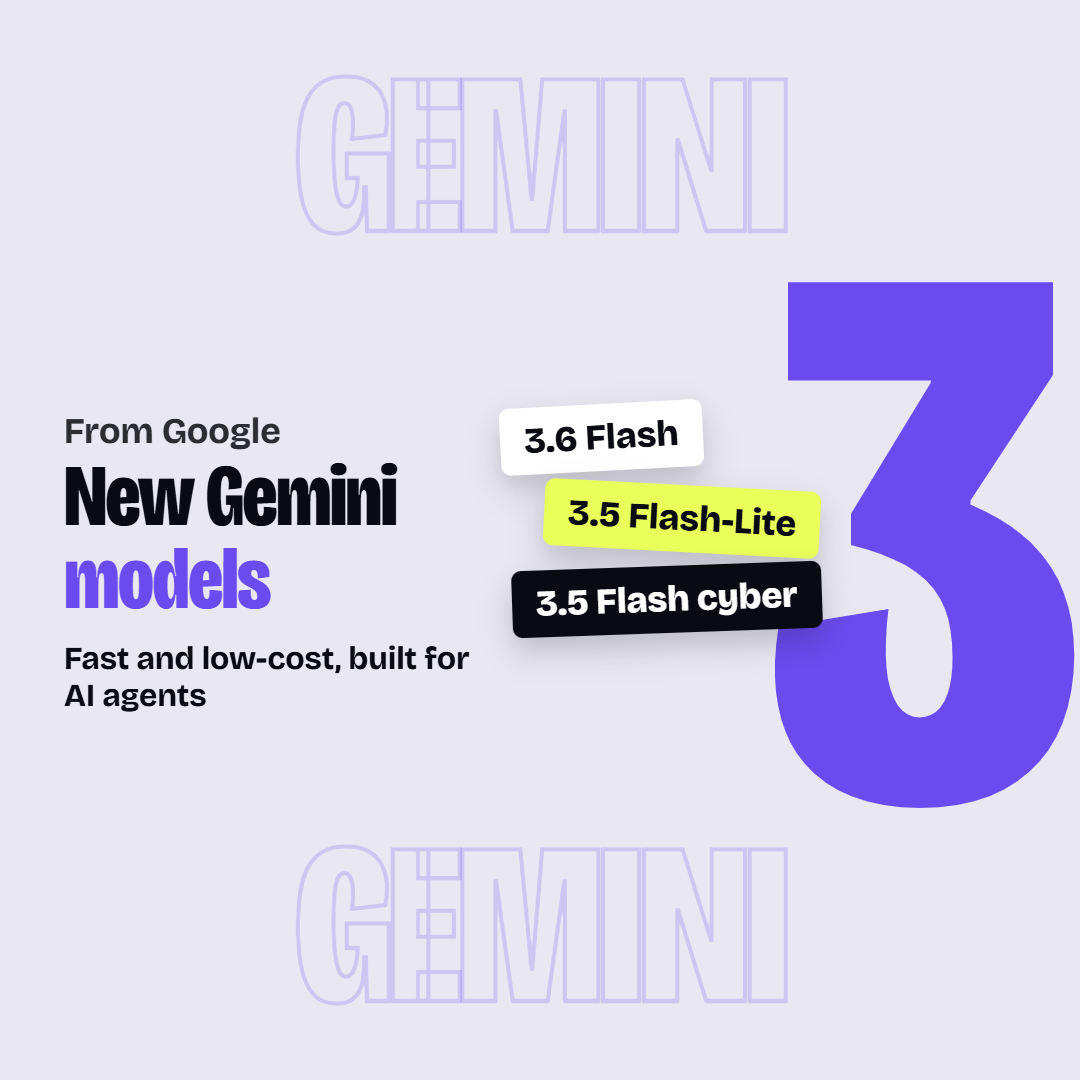
Three new Gemini models from Google built for agents
Google has released three new Gemini models for AI agents that are faster, lower-cost, and focused on cybersecurity: 3.6 Flash, 3.5 Flash-Lite, and 3.5 Flash cyber. The positioning of the models for agents shows that AI is moving toward a structure that no longer just answers questions but takes on tasks.
Speed and cost are two core criteria for teams looking to embed AI into everyday workflows. The fact that a cybersecurity-focused model is offered separately is also a reminder of how high a priority security is in this new era.
Claude's tone varies by model and language
In a published study, Anthropic confirmed that Claude's responses can show a different tone and behavior depending on the model and language used. Getting answers in a different tone to the same question in different languages is an important detail for teams that work in multiple languages.
For brands producing AI-assisted content, the message is clear: outputs need to be reviewed separately for each language, and you need to make sure the brand voice stays consistent in every language.
Three new websites from Clockwork
At Clockwork, we launched the websites of Fuzul Holding, Adalya Hotels, and Richmond Hotels on our strong digital infrastructure. Bringing the digital face of three brands from different sectors to life in the same period was part of a period our team is proud of.
We thank the brands that trusted us with these projects and wish their new sites strong connections with their visitors.
A physical controller for Codex
OpenAI has introduced Codex Micro, a controller that lets developers manage their Codex AI agents faster with physical keys. As AI agents become widespread in the software world, the ways of interacting with them are diversifying too.
This approach, which moves beyond the screen, is another example of the effort to make AI a natural part of the workflow.
Meta pulled Muse Image
Meta has pulled the AI-powered Muse Image feature it was testing on Instagram, citing users' privacy concerns. This decision shows that the success of a new feature depends not only on technical capability but also on user trust.
The same principle applies to brands: when designing an AI-assisted experience, clearly explaining how the user's data is used is the most solid way to build trust from the start.
Humans and agents at the same table: Buzz
Buzz, an open-source app that brings people and AI agents together in the same workspace and combines communication and project management on a single platform, has been introduced. When teammates and AI agents start working in the same channel, the division of labor and communication habits are reshaped too.
Tools like this point to a time when teams start to think of AI not as a separate tool but as part of the team.
X takes action against content theft
X has announced new AI-powered measures to pass revenue earned from copied content on to the original creators and to prevent content theft. This step is an important signal that platforms will reward original content creation more visibly.
For brands and content creators, the message is clear: original content produced with real effort is always more valuable in the long run.
Google is labeling AI in ads
Google has announced that it will roll out a new labeling system so that users can tell apart ads created or edited with AI. As the use of AI in ad creatives grows, it becomes more important for users to know what they're looking at.
For brands and agencies producing ads, this means factoring labeling into the plan when deciding how to use AI in creative processes.
What this issue has in common
Most of the topics in this issue converge around the same concept: trust. A feature pulled over privacy concerns, new measures protecting content creators, and labels for AI ads show how important the relationship between technology and the user is.
At Clockwork, we continue to closely follow developments in the digital world and to bring new projects to life with our brands. Stay tuned to keep up with the latest; see you in the next issue of ClockworkMag.